


Native vs. Cross Platform Mobile App Development: Which One Is Better?
Planning to develop an app? Or confused between native app and cross-platform app? This article comes to your help if you’re in mix-up to choose between native and cross-platform app but no clue about which to choose!
Native Vs Cross-Platform Development: Pros & Cons Revealed
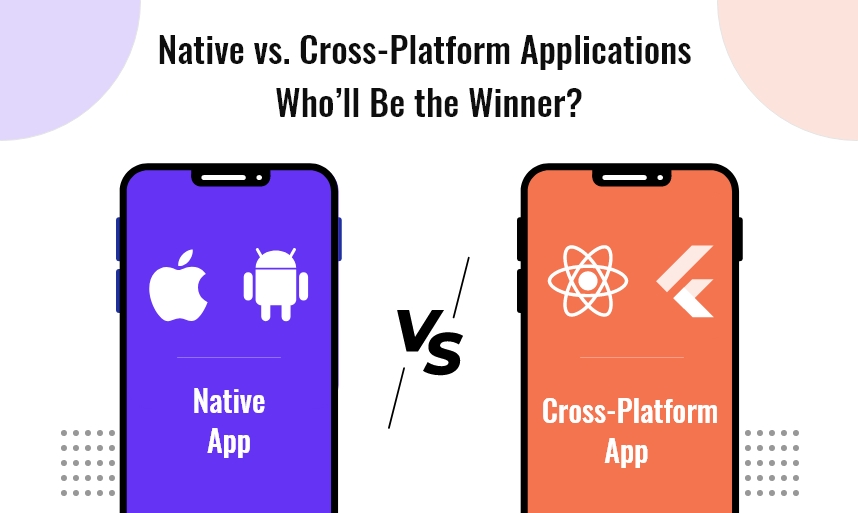
Choosing the right development approach is the first and most critical decision you’ll make when building a mobile application. The two main options are Native and Cross-Platform development, and the “better” choice depends entirely on your project’s specific goals, budget, timeline, and required features.
First let’s understand what is native app and cross-platform app:
Native App:
Native app, commonly called as mobile app, is an app developed for a specific platform (for iOS, Android, Windows or any other). In this case, you need to develop an app for all platforms separately using respective technologies. Swift is used for iOS app development and Java is used for Android app development.
Native app development involves creating separate applications for each platform (iOS and Android) using their respective programming languages and tools.
🛠️ Key Characteristics
- iOS: Developed using Swift or Objective-C with Xcode.
- Android: Developed using Kotlin or Java with Android Studio.
👍 Pros
- Superior Performance: Native apps are faster, more stable, and offer the best performance because they are written specifically for the operating system.
- Full Feature Access: They have unrestricted access to all native device APIs and features (camera, microphone, GPS, gestures, etc.).
- Best User Experience (UX): They adhere perfectly to the UI/UX standards of each platform, resulting in a seamless and familiar experience for users.
- Strong Community Support: Direct access to official development tools and extensive community support for troubleshooting.
👎 Cons
- Higher Cost & Time: You must develop and maintain two separate codebases, effectively doubling the development effort, time, and cost.
- Larger Team Required: Requires specialized developers proficient in both Swift/Objective-C and Kotlin/Java.
Read more: Retail Trends in Mobile and Social Marketing

Cross-platform App:
Cross-platform app is an app developed for multiple platforms (iOS, Android, Windows or other) using one code base. Cross-platform apps are developed using cross-platform development tools like Ionic, Xamarin, PhoneGap, and Sencha.
Cross-platform development uses a single codebase that can be compiled and deployed across multiple operating systems (iOS and Android), often using popular frameworks.
Framework Examples
The most popular frameworks for cross-platform development include:
- React Native: Uses JavaScript/TypeScript.
- Flutter: Uses Dart.
- Xamarin: Uses C#.
👍 Pros
- Cost-Effective & Faster Time-to-Market: With one codebase, development costs and time are significantly reduced compared to native.
- Wider Reach: Launching on both iOS and Android simultaneously is streamlined, maximizing your potential user base immediately.
- Simplified Maintenance: Updates and bug fixes only need to be implemented once across the single codebase.
👎 Cons
- Compromised Performance: While modern frameworks are fast, they may struggle with graphics-intensive applications (like 3D games) or applications with complex animations.
- Limited Native Access: Full access to all new or unique platform features might be delayed or require complex workarounds (bridges) to access.
- Dependency on Framework Updates: Your app is dependent on the framework creator (Google for Flutter, Meta for React Native) to update tools for new OS versions.
Read more: How Much Does It Cost to Make an App?
Advantages of Native App:
- You can utilize all the platform’s and devices’ abilities in your app. For example, you can utilize 3D Touch feature for iOS app.
- Quicker and more efficient features, as they are optimized for each platform
- Easy to make your app compatible with associated devices, for example, iPhone app’s compatibility with Mac computer or iPad
- More responsive UI particularly when it comes to animations
- Smoother functionalities on all mobile devices
- Easy distribution, as apps built using native tools are always preferred by the app stores of Apple or app store of Google
- Native apps are more secure when compared to cross platform apps

Read more: SEO Techniques to Improve Your Search Rankings in 2026
Advantages of Cross-platform App:
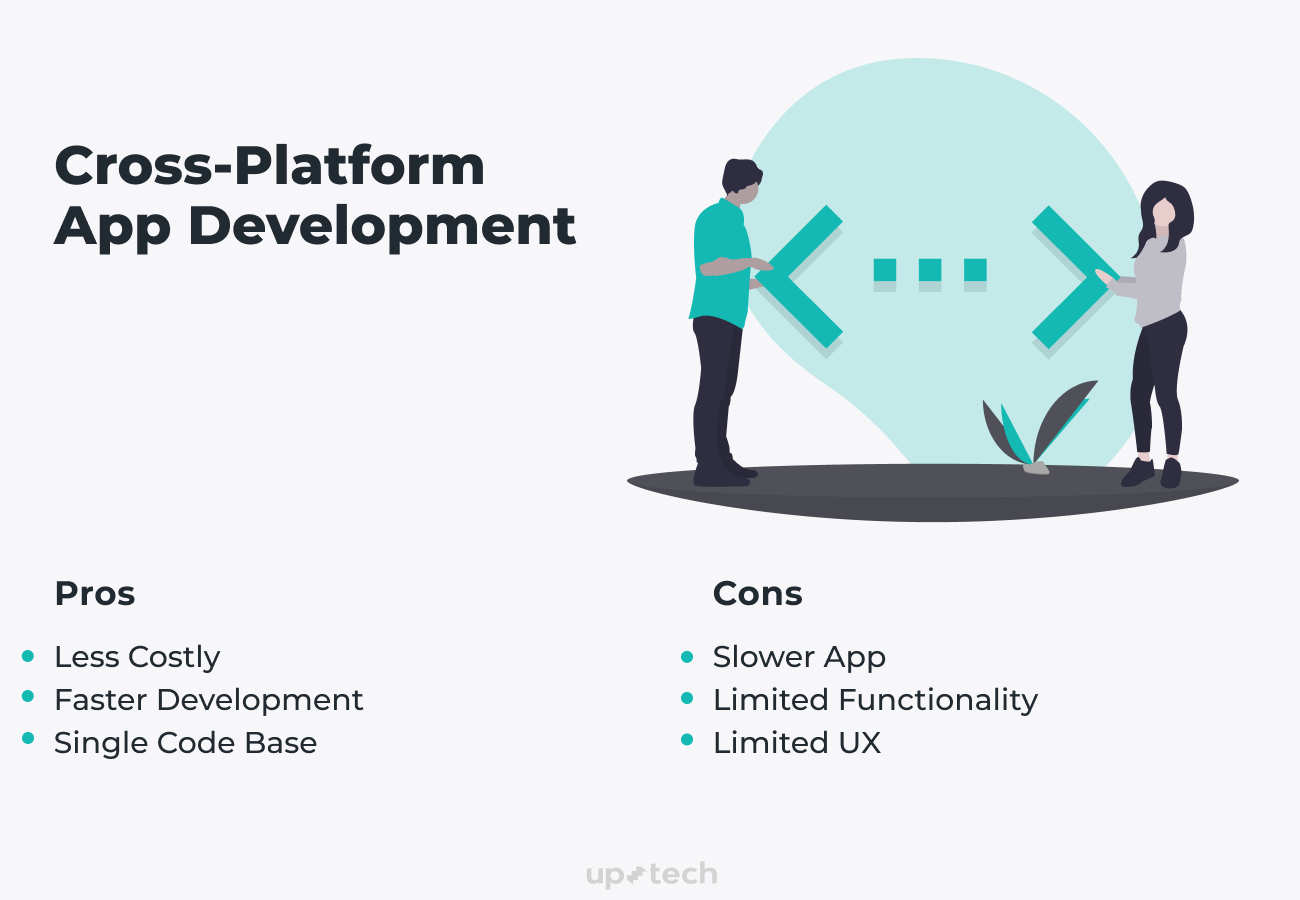
- Less expensive and less time-taken, as codes are written once and used for all platforms
- Business logic functionality testing is more straightforward and cheaper
- Cross-platform frameworks do not support all the features of an OS. Developers require to wait for the update
When should you choose native app?
- When you have an enough budget to develop an app for multiple platforms separately
- When your ultimate goal is to offer rich user experience
- If you want to utilize platform and device specific features and functionalities
- If you are more concerned about security

Read more: How to Build an Online Presence for your Business on the Web
When should you choose Cross-platform App?
- When you need to develop an app within a tight deadline
- If you want to develop a mobile game (iOS / Android)
- When your budget is constrained
- If you’re not much worried about device and platform specific features and functionalities
- If you want to develop B2B or business process automation apps, where deployment time is more important than rich look
- When you need to conduct some tests for your business idea in the real market
- When you want to turn your website into an app for a minimal price
| Feature | Native Development | Cross-Platform Development |
| Performance | 🥇 Best (Fastest, most stable) | Good to Very Good (Can be an issue for complex apps) |
| Development Cost | 💰 High (Two codebases) | ✅ Lower (One codebase) |
| Time-to-Market | Slow (Need to build for two platforms) | 🚀 Fast (Single development cycle) |
| UX/UI | Perfect (Follows platform standards) | Near-Native (Requires effort for platform-specific feel) |
| Hardware/API Access | Unrestricted (Full access) | Restricted (Requires bridges for some features) |
The Verdict: Which One Is Better For You?
The choice is not about one being inherently “better,” but which is the best fit for your project’s needs.
Choose Native If:
- Your app’s success depends on peak performance (e.g., complex games, graphic-heavy tools, professional video editing).
- Your app needs to constantly use new or highly specific device-specific hardware features (e.g., AR/VR features, unique sensor access).
- You require a truly polished, uncompromised UX that perfectly aligns with the operating system’s design guidelines.
- Budget is less of a concern than quality and stability.
Choose Cross-Platform If:
- You need to get to market quickly and with a lower budget.
- Your app is content-driven (e.g., social media feeds, e-commerce, basic utility apps).
- Your primary goal is to reach the largest possible audience simultaneously.
- You have a limited team and want to maintain one codebase.
Conclusion:
Now we have come over two popular mobile app development approaches. I hope now you can easily take decision between these platforms. From a technical point of view and user experience, native development has far more advantages. Some mobile app development companies in India like SMACware always prefer to develop native apps, as it adds more value to their clients in terms of customer acquisition and engagement. But the final decision depends on their customers’ preference.
When it comes to cost and time, cross-platform has better advantages. Most modern mobile games are developed on cross-platform technologies. Cross-platform allows you to develop games without sacrificing quality. In case of games on cross-platform, special graphics frameworks are used, mostly Unity 3D. On the other hand, if your app is not aimed at long-term development, but needs rich look and performance, native app development is the best way you can go with.
If ready to go for Mobile app development for business to increase the revenue with native app or cross-platforom, then SMACware can help you integrate your business with the latest AI Technologies for your mobile apps. SMACware, which is the best mobile app development company that has helped many global companies increase their business revenue. Apart from app development SMACware also expertise in Mobile Game development, video production, Photography, corporate branding, events & exhibition, digital marketing, WordPress Website Development, PHP website development, and web development services.
Mitch
Hi there, I enjoy reading through your article. I like
to write a little comment to support you.
P.S. If you have a minute, would love your feedback on my new website
re-design. You can find it by searching for «royal cbd»
— no sweat if you can’t.
Keep up the good work!
Also visit my blog post; buy instagram followers
Best Productivity Apps for Android in 2021
[…] Read more: Native vs. Cross Platform Mobile App Development: Which One Is Better? […]
How Much Does it Cost to Develop Taxi Booking App like OLA
[…] Also Read: Native vs. Cross Platform Mobile App Development: Which One Is Better? […]
How Much Does it Cost to Develop Mobile Wallet App like PayTM
[…] Also Read: Native vs. Cross Platform Mobile App Development: Which One Is Better? […]
Top Android App Development Trends for 2022
[…] Native Design […]